Why parlays bleed: the multiplier is the risk
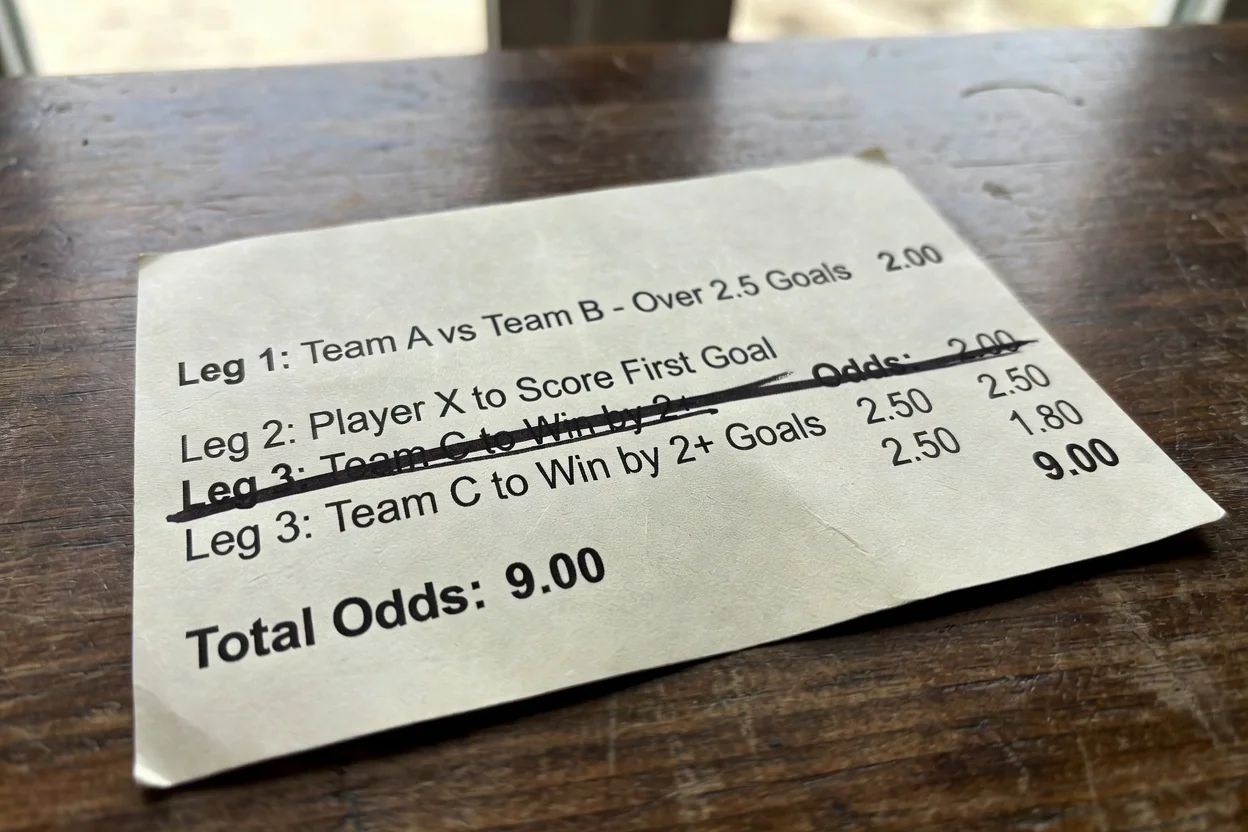
A parlay is a multiplier, not a shortcut to a bigger win with the same risk. Three legs at 1.50 print as 3.375 on the slip, and that number looks like free juice until you remember that every extra leg is another way to lose the whole ticket: one miss and nothing settles. This page is that arithmetic — why the pretty price is a thinner path, and when two legs you would have backed as singles are still a choice rather than a raffle. It is not a sermon that you must never parlay. It is a request that you stop adding a third “lock” you would not bet on its own.
Even if each leg were independent, probabilities multiply, and a 1.50 price already has the book’s margin in it. Cube that margin and you need a heater just to break even over a season. The slip does not show that. It shows 3.375 and a brighter button. Same-game parlays add a second problem that the coupon will not flag: two markets on one match can chew each other while the ticket still takes the money.
Why the product on the slip is not a gift
You are not getting a better price for the same risk. You are buying a harder event at a number that feels generous. If you would not bet a leg as a single at the same unit, it does not belong on the ticket as “a small one to boost the price,” because that small one is usually the link that opens. Write the product on paper once. The act of writing is often enough to make the “easy three” feel less easy, which is the point of the exercise rather than a superstition.
- Write the product on paper instead of trusting the pretty slip alone.
- Ask of every leg whether you would bet it as a single at the same unit.
- If two legs share a match, say out loud whether the stories fight.
- Two legs you already like can be a parlay; five “locks” are a raffle.
- Unit size stays the single-bet unit. A bigger price is not a bigger stake.
| Check | Ask | If no |
|---|---|---|
| Alone? | Same stake, same game, as a single? | Leave it off |
| Fight? | Same match, opposite markets? | Pick one |
| Count? | More than two? | The extra “lock” is usually the one that dies |
When a two-legger is still a bet, and when it is not
Two sides you would actually back as singles, that do not cancel each other, at the same unit as a single: that is a preference, not a lottery ticket. Building the slip live while you have not watched the second game is the same trap with worse information. Raising the stake because “the number got pretty” erases the only reason the number got pretty — more ways to lose. If you want the juice, the honest place to earn it remains the singles you already understood.
What to leave on the table
Parlays multiply price and failure at the same time, which is why the coupon feels generous and behaves like a chain. Two legs you already like can stay. The third “lock” is how most slips die, and it is worth remembering that a chain is not a shortcut: one break ends the whole ticket, no matter how attractive the product looked when you pressed the button.